Dry Needling vs Acupuncture: What's the Real Difference?
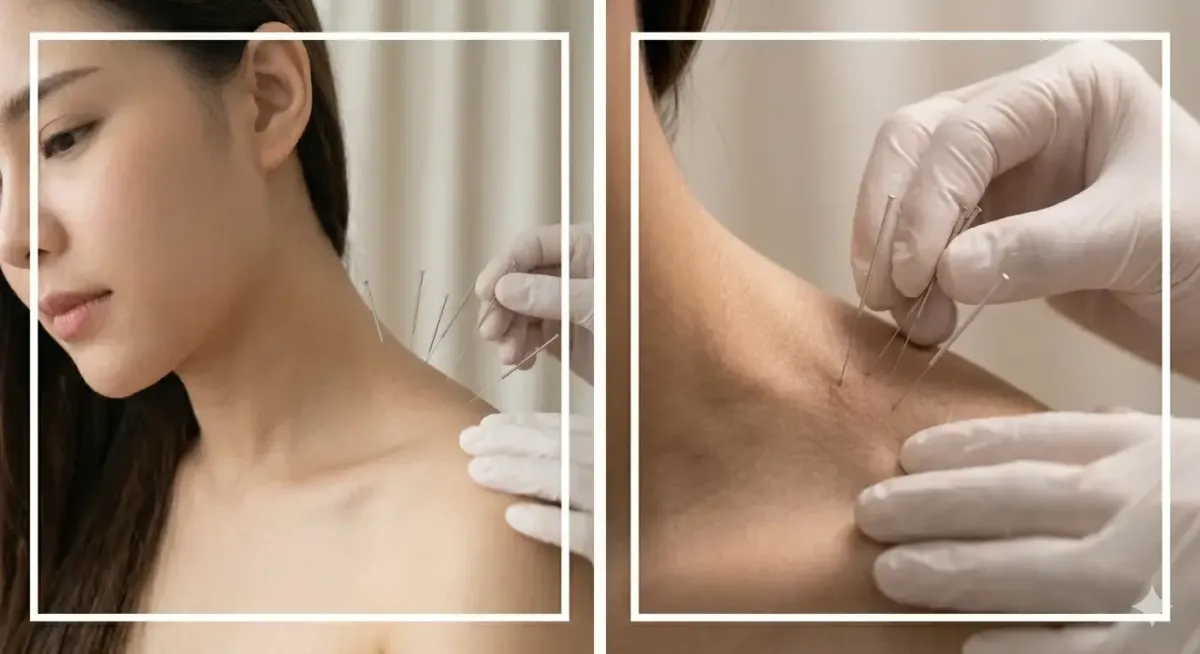
If you have ever searched "is dry needling the same as acupuncture," you are not alone. Both treatments use fine needles inserted into the body, and at first glance, they can look remarkably similar on a treatment table. Yet beneath the surface, these two practices come from entirely different traditions, operate on different principles, and are designed to achieve different outcomes.
Understanding the distinction matters, especially when you are making decisions about your health. Whether you are navigating chronic pain, hormonal changes, fertility concerns, stress, or simply trying to make sense of what your practitioner is recommending, knowing how each approach works gives you the clarity to choose wisely.
This guide walks you through everything you need to know:
How traditional acupuncture works within the framework of Chinese Medicine
How dry needling operates from a Western, anatomy-focused perspective
The practical differences in technique, sensation, and application
Which conditions each approach may be best suited for
What to consider when deciding which path to explore
By the end, you will have a clear, honest picture of both practices and a better sense of which direction may feel right for you.
What Is the Main Difference Between Dry Needling and Acupuncture?
The core difference between dry needling and acupuncture comes down to philosophy, training, and intent.
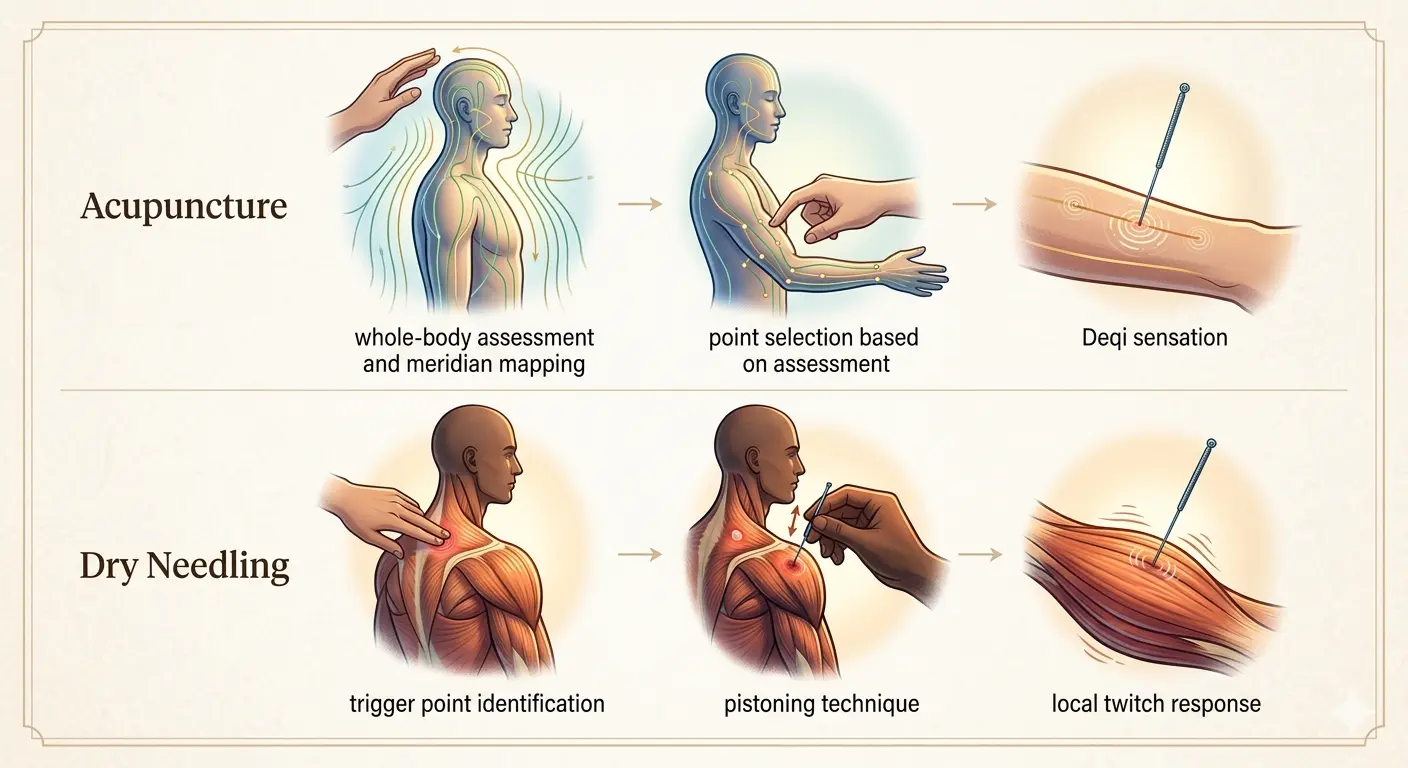
Acupuncture is a practice rooted in Traditional Chinese Medicine (TCM), a system of thought developed over thousands of years. It works with the concept that the body has a vital energy, known as qi, that flows through pathways called meridians. When that flow becomes disrupted, blocked, or imbalanced, physical and emotional symptoms may follow. Acupuncture uses fine, sterile needles to restore balance along these pathways, addressing the whole person rather than a single symptom.
Dry needling, by contrast, emerged from Western medicine and physiotherapy. It targets specific points within muscle tissue known as trigger points, which are areas of tightened, hypersensitive muscle fibre that can cause local or referred pain. The focus is anatomical: releasing muscular tension, improving range of motion, and reducing pain in a defined region of the body.
Both approaches use the same type of needle, a fine, sterile monofilament needle. But the points selected, the reasoning behind selecting them, and the intended outcomes are shaped by entirely different frameworks. Acupuncture takes a whole-body, root-cause view. Dry needling takes a targeted, tissue-specific view.
Neither approach is simply a variation of the other. They are distinct disciplines with distinct training pathways, distinct philosophies, and distinct applications.
How Does Traditional Acupuncture Work?
The Foundations of Chinese Medicine
Traditional acupuncture is inseparable from the philosophy of Traditional Chinese Medicine. In this system, the body is understood not just as a collection of tissues and organs, but as an interconnected whole, shaped by dynamic forces described as yin yang. Health arises when these forces are in balance and when qi moves freely through the meridians. Illness, pain, or emotional disturbance may signal that something in that flow has become disrupted.
Meridians are not anatomical structures you will find in a Western textbook. They are functional channels, each associated with particular organ systems, emotions, and physiological processes. An acupuncturist trained in TCM reads the body through careful observation, listening, and pulse and tongue diagnosis. This informs which points along the meridians are selected for needling, and why.
A Whole-Person Approach
What makes acupuncture distinctive is that it does not treat symptoms in isolation. A practitioner may select points to support the digestive system, calm the nervous system, and address emotional stress within a single session, because in Chinese Medicine these systems are understood as related. Two people presenting with the same surface-level complaint may receive quite different treatments, because the root cause, as understood through TCM, may differ.
This whole-person philosophy means acupuncture may be considered for a wide range of concerns, from physical discomfort to hormonal shifts to emotional wellbeing.
Modern Understanding
Practitioners today integrate the classical Chinese Medicine framework with a contemporary understanding of anatomy and physiology. Acupuncture points are known to correspond with areas of heightened nerve density, fascial junctions, and areas that influence neural pathways, endorphin release, and blood supply. This does not replace the TCM framework; it simply adds another lens through which to appreciate why acupuncture may produce effects beyond the site of needling.
How Does Dry Needling Work?
Trigger Points and Myofascial Tension
Dry needling targets trigger points, which are discrete, hypersensitive spots within a taut band of myofascial tension, the connective web of fascia and muscle fibre that runs throughout the body. These points may develop following injury, overuse, poor posture, or sustained physical strain. They can cause local pain, restrict movement, and sometimes produce referred pain in areas seemingly unrelated to the needle site.
When a needle is inserted into an active trigger point, it may provoke what practitioners call a local twitch response, a brief, involuntary contraction of the muscle. This response is considered significant: it suggests the needle has engaged the dysfunctional tissue and may help initiate a process of release and repair.
Pistoning and Depth
Dry needling practitioners often use a technique called pistoning, where the needle is moved in and out within the tissue to sustain engagement with the trigger point. Depending on the target tissue, needling may be superficial, engaging the upper layers of muscle and fascia, or deep, reaching closer to the bone periosteum in certain applications. The depth and technique are selected based on the specific muscle group and the clinical goal.
Neurophysiological Mechanisms
From a Western perspective, the effects of dry needling are understood through neurophysiological control of pain and tissue function. Needling a trigger point may influence local inflammation, promote tissue repair, improve blood supply to the area, and modulate pain signals through neural pathways. The aim is to restore normal muscle function, improve range of motion and flexibility, and reduce the sensitivity of the affected area.
Key Differences Between Acupuncture and Dry Needling
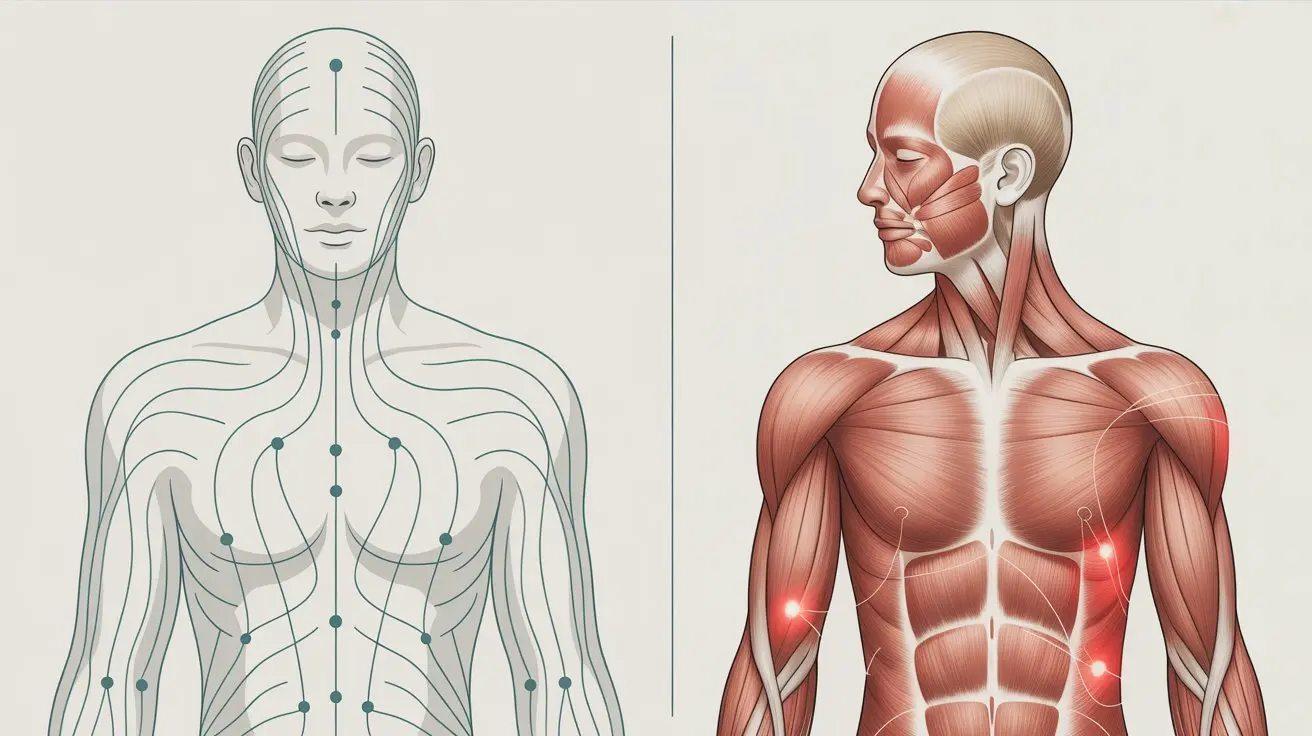
Understanding acupuncture vs dry needling side by side helps clarify which might be relevant for your situation.
Both can be valuable. The question is which aligns with what you are looking to address.
Are the Needles the Same for Both Treatments?
Yes. Both acupuncture and dry needling use the same type of instrument: a fine, sterile needle made of stainless steel, referred to as a monofilament needle. These are single-use, individually packaged, and disposed of immediately after each session.
Where they differ is in diameter and length selection. Acupuncture needles tend to be extremely fine, often thinner than a human hair, and are selected according to the point being treated and the depth required. Dry needling needles may sometimes be slightly thicker or longer, depending on the muscle depth being targeted.
It is worth noting that the sensation these needles produce can vary considerably, not because one needle is inherently more painful than the other, but because of where they are inserted and how the technique is applied. A needle placed at a superficial acupuncture point along the wrist may feel very different from one guided into a deep trigger point in the gluteal muscles.
Does Dry Needling Hurt More Than Acupuncture?
This is one of the most common questions people ask, and the honest answer is: it depends.
Acupuncture needles, when placed by an experienced practitioner, are typically associated with sensations described as a mild ache, heaviness, or warmth around the point. This is often referred to in Chinese Medicine as the "deqi" sensation, and it is considered a sign of engagement. Many people are surprised by how gentle and even relaxing a session can feel.
Dry needling, particularly when it provokes a local twitch response in a tight trigger point, can feel more intense in the moment. The brief muscular contraction may be noticeable, and some people experience an aching or cramping sensation during the technique. This typically passes quickly.
Post-treatment muscle soreness is common with dry needling and can persist for a day or two, similar to the feeling after a deep tissue massage. Mild bruising can occasionally occur around the needled area.
With acupuncture, post-treatment responses are usually more subtle. Some people feel deeply relaxed or slightly tired after a session, and a small number experience mild light-headedness if they have not eaten beforehand.
Individual tolerance, sensitivity, and the skill of the practitioner all play a significant role in how either treatment feels. A trauma-informed practitioner will always work within your comfort level, adjust techniques to your needs, and ensure full consent is obtained before any treatment begins.
When Might One Approach Feel More Suitable Than the Other?
This is where the theoretical differences start to feel personal. Choosing between these two approaches is not about which is "better" in some absolute sense. It is about which aligns with what you are experiencing and what you are hoping to achieve.
If your primary concern is a specific area of muscular tension, a persistent knot, restricted movement following injury, or a biomechanical issue that has not responded to other interventions, dry needling may be worth exploring with a qualified physiotherapist or myotherapist trained in the technique. It is worth noting, however, that a TCM practitioner can also address localised pain and musculoskeletal concerns. Acupuncture has a long history of treating physical pain at specific sites, so dry needling is not your only option if your concern is local or structural.
If, on the other hand, you are navigating something more layered, such as ongoing fatigue, hormonal shifts, fertility concerns, anxiety, digestive disruption, or a sense that multiple systems feel off at once, acupuncture's whole-person approach may be a more fitting starting point. Chinese Medicine is particularly well-suited to conditions that are chronic, cyclical, or where the pattern behind the symptoms is as important as the symptoms themselves.
Some people find that both approaches have a place in their care at different times or for different concerns. That is entirely reasonable, and many practitioners are happy to discuss how each might complement the other.
If you are navigating fertility, hormonal changes, stress, or pain and are looking for gentle, personalised, holistic support, Louise Jeffrey Acupuncture in Wahroonga would love to help you explore what the right path might look like for you. You can reach out via louisejeffrey.com to book a consultation or ask a question.
What Conditions Can Acupuncture Help With?
Acupuncture within a Chinese Medicine framework is applied across a broad range of physical and emotional concerns. In Australia, AHPRA-registered practitioners are guided by a strict code of standards and ethics.
That said, many people seek acupuncture support for:
Stress reduction and nervous system regulation
Sleep difficulties and fatigue
Hormonal issues, including menstrual irregularity, pelvic pain, and conditions such as endometriosis and PCOS
Fertility support for natural conception and alongside IVF cycles
Pregnancy support, from the first trimester through to birth preparation
Perimenopause and menopause, including hot flushes, mood changes, and night sweats
Headache and migraine
Digestive issues and bloating
Sinus issues and respiratory concerns
General wellbeing and immune resilience
Acupuncture approaches each of these from the perspective of restoring balance within the body's systems, rather than isolating a single symptom to target.
What Conditions Benefit Most from Dry Needling?
Dry needling tends to be most relevant for musculoskeletal complaints, particularly those involving tightened, restricted, or painful muscle tissue.
Conditions commonly addressed with dry needling include:
Neck pain and cervicogenic headache
Low back pain and lumbar tension
Shin splints and lower limb muscle fatigue
Temporomandibular joint (TMJ) dysfunction and jaw tension
Tendinopathy and tendon-related overuse injuries
Whiplash and post-injury muscular restriction
Carpal tunnel syndrome and forearm tension
Scar tissue management and post-surgical recovery
Fibromyalgia and widespread musculoskeletal pain
Osteoarthritis-related muscle guarding
In each of these cases, the focus is on releasing specific areas of tension within the soft tissue, restoring normal muscle mechanics, and supporting the body's capacity for tissue repair.
Can Acupuncture and Dry Needling Be Combined?
Yes, in many cases. Some practitioners, particularly those with dual training in TCM and physiotherapy or remedial massage, will integrate elements of both approaches within a treatment plan. Others work in collaborative care arrangements, where an acupuncturist and a physiotherapist each address different aspects of a person's health simultaneously or in sequence.
For example, someone recovering from a sports injury might benefit from dry needling to address the primary muscular restriction, while also working with an acupuncturist to support overall recovery, sleep quality, stress, and systemic inflammation. A person managing a chronic condition might find that acupuncture addresses the underlying pattern, while dry needling supports specific areas of physical tension that arise along the way.
Electro-acupuncture, a technique used within TCM where a gentle electrical current is applied through the needles, is sometimes integrated alongside standard acupuncture and offers its own distinct effects. Similarly, modalities such as cupping, moxibustion, and remedial massage can be combined with acupuncture as part of a broader Chinese Medicine treatment plan.
The key is open communication between practitioners and a treatment approach that is genuinely tailored to the individual.
Who Should Consider Each Treatment, and Who Should Be Cautious?
Considerations for Acupuncture
Acupuncture is suitable for a wide range of people, including those who prefer a gentle, non-invasive, whole-person approach. It is often particularly valued by people who have found that their symptoms do not fit neatly into a single biomedical category, or who are looking to support their health across multiple areas simultaneously.
People who may particularly benefit from working with an acupuncturist include those navigating fertility journeys, hormonal transitions, pregnancy, postpartum recovery, chronic stress, or longstanding conditions that have not fully responded to other treatments.
Appropriate caution applies in certain situations. Anyone with a bleeding disorder, who is taking blood-thinning medication, or who has a pacemaker should inform their practitioner before treatment. Acupuncture is generally considered safe during pregnancy when performed by a qualified practitioner with experience in pregnancy care, though certain points are avoided. Always disclose your full health history at your first appointment.
Considerations for Dry Needling
Dry needling is best suited for people with specific musculoskeletal complaints, particularly those involving trigger points, muscular restriction, or localised acute pain or chronic condition patterns in the soft tissue.
People who should be cautious or seek specialist advice before dry needling include those who are pregnant, who have a fear of strong physical sensations during treatment, who have a history of trauma, or who have conditions affecting tissue integrity or immune response. As with any needling technique, anatomy knowledge and proper post-graduate training are essential qualifications to look for in a practitioner.
What to Expect in a Professional Acupuncture Session
If you have never had acupuncture before, it is natural to feel uncertain about what to expect. A well-run session begins well before the needles.
Your first appointment will typically involve an extended consultation. Your practitioner will take a thorough health history, ask about your current concerns, your sleep, digestion, menstrual cycle (if relevant), stress levels, and general patterns of health. In Chinese Medicine, this process is diagnostic: the practitioner is building a picture of your overall pattern, not just your presenting complaint. Pulse and tongue diagnosis are common assessment tools in TCM.
From there, you will discuss the proposed treatment approach, and your practitioner will explain what they are planning and why. Full informed consent is obtained before any needling begins.
During the treatment itself, you will lie comfortably, usually on a treatment table, while fine needles are placed at selected points. Most people find this deeply relaxing. Sessions typically last between 45 minutes and an hour for an initial appointment, with follow-up sessions slightly shorter.
Aftercare is straightforward: stay well hydrated, rest if you feel tired, and avoid strenuous activity for the remainder of the day. Your practitioner will discuss how many sessions may be appropriate for your situation and what to look for in terms of how your body responds.
Why Choose a Trauma-Informed Acupuncture Practitioner?
Not all acupuncture is delivered in the same way. The quality of care, the depth of listening, and the safety of the therapeutic environment matter enormously, particularly for people who carry physical or emotional sensitivity, or who have had difficult experiences with healthcare in the past.
A trauma-informed practitioner brings an additional layer of awareness to the clinical relationship. They understand that the body holds history, that certain sensations or positions may feel unsettling, and that feeling in control of your own treatment is not optional; it is foundational. Consent is ongoing, communication is open, and the pace of treatment is always guided by the person on the table.
Louise Jeffrey, who leads the Wahroonga Acupuncture Clinic, brings over 15 years of clinical experience and has supported more than 3,000 patients through a wide range of health concerns. Her background includes a Bachelor of Health Science in Traditional Chinese Medicine, AHPRA registration, and membership with both CMRB and ANTA. Her additional training in coaching, psychotherapy, and eating psychology informs a deeply whole-person approach that goes beyond the needle.
Louise's experience as a mother of three, alongside her own journey navigating stress-related health challenges, shapes the empathy and genuine care she brings to every session. For many patients, what they value most is not just the clinical skill, but the feeling of being truly heard.
Our Promise to You at Wahroonga Acupuncture Clinic
At Louise Jeffrey Acupuncture, every appointment is designed around you. Sessions are unhurried, one-on-one, and guided by careful listening and individualised diagnosis. There is no one-size-fits-all protocol here: your treatment is shaped by your unique pattern, your history, and your goals.
The clinic is AHPRA-registered, which means your care meets the professional and ethical standards required of all registered Chinese Medicine practitioners in Australia. Private health rebates are available through all major health funds, making access to regular care more manageable for many patients.
The Wahroonga clinic is conveniently located on Sydney's Upper North Shore, with easy access from Turramurra, Gordon, St Ives, Pymble, and surrounding suburbs. The environment is calm, private, and welcoming, designed to support relaxation from the moment you arrive.
Whether you are coming in for fertility support, hormonal health, pain management, stress, or simply to invest in your overall wellbeing, you will find a practitioner who is genuinely invested in your journey.
Frequently Asked Questions About Dry Needling and Acupuncture
What is the main difference between acupuncture and dry needling?
Acupuncture is grounded in Traditional Chinese Medicine and uses fine needles placed along meridian pathways to restore balance of qi and support whole-body health. Dry needling comes from Western physiotherapy and targets trigger points within muscle tissue to release tension and reduce localised pain. The needles look similar, but the philosophy, training, point selection, and intended outcomes are quite different.
Does dry needling hurt more than acupuncture?
Dry needling can feel more intense, particularly when it provokes a local twitch response in a tight trigger point. Acupuncture is generally described as mild and often deeply relaxing, with a characteristic aching or heaviness around the needle known as deqi. Post-treatment muscle soreness is more common after dry needling. Individual sensitivity and practitioner skill both play a significant role in how either treatment feels.
What conditions can acupuncture help treat?
Acupuncture may assist with a broad range of concerns, including stress, anxiety, sleep difficulties, hormonal imbalances, fertility support, pregnancy care, menopause symptoms, headaches, digestive issues, sinus complaints, and chronic pain. Because Chinese Medicine takes a whole-person approach, the treatment is tailored to the individual pattern behind the symptoms, not just the surface presentation.
What conditions benefit most from dry needling?
Dry needling tends to be most effective for musculoskeletal complaints involving trigger points, tightened soft tissue, or restricted movement. Common applications include neck pain, low back pain, shin splints, TMJ dysfunction, tendinopathy, whiplash, carpal tunnel syndrome, scar tissue management, fibromyalgia, and osteoarthritis-related muscle tension.
Are the needles the same for both treatments?
Both use fine, sterile, single-use monofilament needles made from stainless steel. The instruments are the same in type. Differences can occur in gauge and length depending on the treatment area and depth required. In both cases, needles are used once and disposed of immediately after the session.
Who should avoid dry needling?
Dry needling may not be appropriate for people who are pregnant, have a bleeding disorder or are on blood-thinning medication, have a compromised immune system, or have a sensitivity to strong physical sensations. People with a history of trauma or significant needle anxiety should discuss their needs with a practitioner before proceeding. Always disclose your full medical history so your practitioner can assess suitability and adjust the approach accordingly.
How does dry needling work mechanistically?
Dry needling works by inserting a needle into a trigger point within a taut band of muscle or fascia. This may provoke a local twitch response, which is thought to help release the dysfunctional tissue. The process may also influence local blood supply, modulate inflammation, support tissue repair, and affect pain signalling through neural pathways. The pistoning technique, where the needle moves within the tissue, is commonly used to sustain engagement with the trigger point.
Can acupuncture and dry needling be combined?
Yes. Some practitioners hold dual training and integrate elements of both within a treatment plan. Others work in collaborative arrangements, where an acupuncturist and physiotherapist address different aspects of a person's care. For example, dry needling may target a specific area of muscular restriction while acupuncture supports systemic recovery, sleep, or hormonal balance. Open communication between practitioners and a shared understanding of the person's goals are essential for integrated care to work well.
Is acupuncture safe during pregnancy?
Acupuncture can be a gentle and supportive option during pregnancy when performed by a qualified practitioner experienced in pregnancy care. Certain points are avoided during pregnancy, and treatment is adapted for each trimester. Always inform your practitioner that you are pregnant before treatment begins, and seek care from someone with specific training in obstetric and pregnancy acupuncture.
How many acupuncture sessions will I need?
This varies considerably depending on the nature and duration of your concern. Acute issues may respond within a few sessions. Chronic or complex conditions, such as those involving hormonal imbalance, fertility, or longstanding pain, typically benefit from a course of treatment over several weeks. Your practitioner will discuss a realistic plan at your initial consultation and review progress along the way.
Conclusion
The difference between acupuncture and dry needling is more than a technical distinction. It is a difference in philosophy, in training, and in how the body and its symptoms are understood.
Dry needling offers a targeted, anatomy-focused approach to musculoskeletal pain and trigger point release. It can be a valuable tool within a physiotherapy or myotherapy context, particularly for those dealing with specific areas of muscular restriction or injury recovery.
Acupuncture, rooted in Traditional Chinese Medicine, offers something broader: a whole-person lens that considers the patterns behind your symptoms, not just the symptoms themselves. For those navigating fertility, hormonal health, stress, emotional wellbeing, or chronic conditions that resist a single-system explanation, acupuncture may offer a genuinely different kind of support.
Understanding dry needling versus acupuncture gives you the knowledge to have a more informed conversation with your practitioner, and to choose the path that truly fits your needs.
If you are ready to explore personalised, trauma-informed acupuncture care on Sydney's North Shore, Louise Jeffrey Acupuncture in Wahroonga is here to help. With over 15 years of experience, a deep commitment to whole-person care, and a warm, unhurried approach, Louise would love to hear what you are navigating and explore how acupuncture might support you. Visit louisejeffrey.com to book a consultation or send a message today.